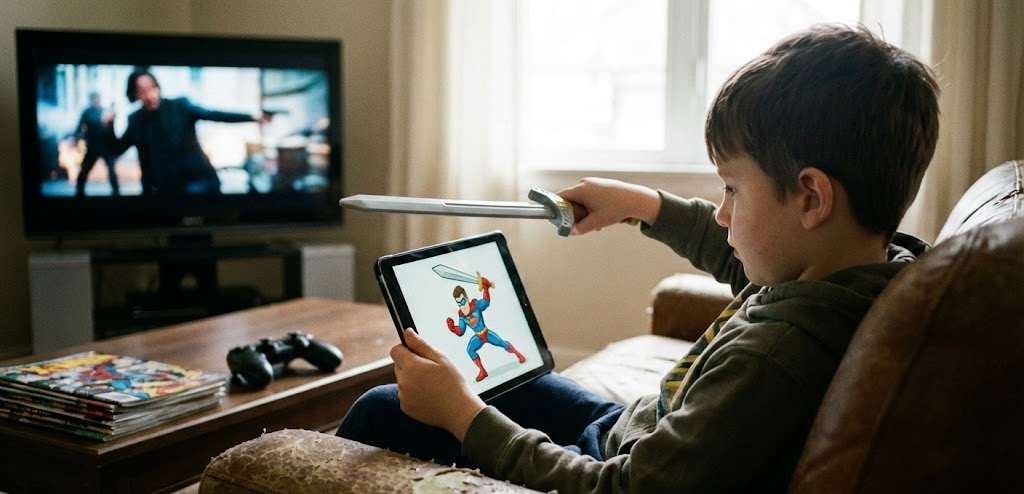

We’ve all seen it—kids quoting movie lines, imitating video game heroes, or copying the style and attitudes of online influencers. This isn’t just harmless play; it reflects what psychologists call symbolic modelling. Simply put, people—especially children—learn by observing others and then imitating what they see. When the media they consume is saturated with aggression or violence, those behaviors can quietly spill over into real life.
As Lefrancois explains, symbolic modelling is particularly powerful in childhood. Children don’t merely watch; they absorb. When they identify with a character, the effect deepens—the character’s traits, actions, and even ways of expressing anger can become part of the child’s own behavioral toolkit. For some, these behaviors may feel like an appealing way to communicate, assert themselves, or stand out.
The broader point is this: aggression isn’t solely something we are born with. While biology plays a role, research consistently shows that environment and learned behavior are equally influential. Even inherited tendencies toward aggression often require external triggers—such as media exposure or social cues—to emerge.
So the discussion isn’t about nature versus nurture. It’s about the interaction between the two. Symbolic modelling reminds us that what children watch, play, and follow matters, and that media and online culture can amplify aggressive behavior in ways we shouldn’t overlook.