
Human beings are meaning-making creatures. To navigate the uncertainty of existence, we construct beliefs—mental frameworks that provide comfort, stability, and a sense of control. Psychologically, beliefs act as defense mechanisms against anxiety. They help us cope with the unknown by offering explanations, even when those explanations are incomplete or unproven. As William James, the father of modern psychology, observed: “Belief creates the actual fact.” In other words, belief shapes our perception of reality, even if it does not align with truth.
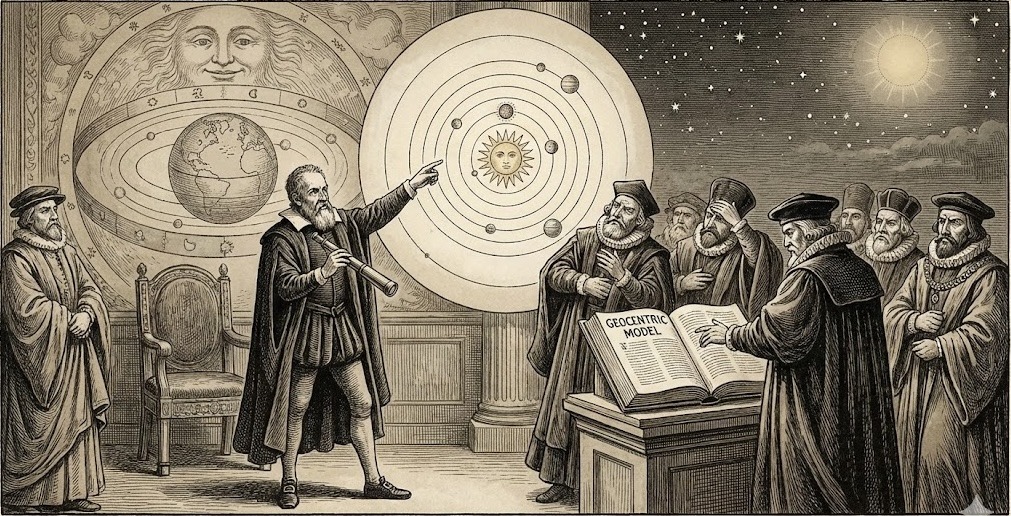
Yet, truth is indifferent to human comfort. Truth exists independently of our desires, fears, or assumptions. It often resists simplicity and convenience, demanding that we confront realities that may unsettle us. From a psychological perspective, this is why truth can provoke cognitive dissonance—the mental discomfort we feel when reality contradicts our cherished beliefs. For example, when Galileo challenged the geocentric worldview, society resisted not because the evidence was weak, but because the truth threatened deeply held beliefs that provided existential comfort.
Another dimension is that beliefs are frequently built on assumptions with minimal or fading evidence. We often cling to them because they feel intuitively right or socially reinforced. Consider the long-standing belief that personality is fixed by astrology or fate. These ideas persist because they offer simple explanations for complex human behavior. Yet psychology shows us that personality is shaped by genetics, environment, and conscious effort—truths that are less comforting but more liberating. As Carl Jung noted, “People will do anything, no matter how absurd, to avoid facing their own souls.” Beliefs often serve as that avoidance.
Importantly, the absence of truth does not grant us the freedom to elevate belief into truth. A belief may temporarily fill the gap of uncertainty, but it cannot substitute for reality. This distinction is crucial for psychological freedom. When we mistake belief for truth, we risk living in illusions that limit growth. But when we courageously confront truth—even when it is uncomfortable—we free ourselves from the chains of false certainty. Truth may destabilize us at first, but it ultimately grounds us in clarity and authenticity.
Philosophically, this tension between belief and truth echoes the Socratic principle: wisdom begins with recognizing our ignorance. Psychologically, it aligns with the process of individuation—becoming whole by integrating uncomfortable truths about ourselves and the world. Beliefs soothe, but truth transforms. Beliefs protect us, but truth liberates us. And while truth may not always be easy to accept, embracing it is the path to genuine clarity, resilience, and inner peace.
Ultimately, we must recognize that escaping reality through comforting illusions or harmful habits only deepens our bondage. We should refrain from abusing drugs or chasing false pleasures in place of genuine healing, simply because we fear facing reality or losing temporary fun. Just as beliefs cannot substitute for truth, artificial escapes cannot substitute for authentic freedom. To embrace truth—even when uncomfortable—is to embrace life itself.